Cross-Country Flying in the Alps
Advanced mountain flying and competition training.
Explore the programmeAbout the programme
Training is based at the AAVA club’s Declared Training Organisation (DTO) in Vinon-sur-Verdon, France. The programme is designed for SPL holders, from pilots beginning to fly cross-country in the mountains to experienced competition pilots preparing to compete in mountain conditions. I tailor the training to your experience and goals.
I provide instruction in Russian, Ukrainian, English or French. You can choose the language you feel most comfortable with.
In this section
My approach
Not just knowing how to do it, but understanding why.
When flying in the mountains, it is important to understand how terrain and weather influence route choice and to make informed decisions. Preparation, discipline and adherence to rules and procedures remain the foundation of our work.
Whatever your level of experience, safety remains the priority. Flying should be enjoyable, not a test of courage.
Training objectives
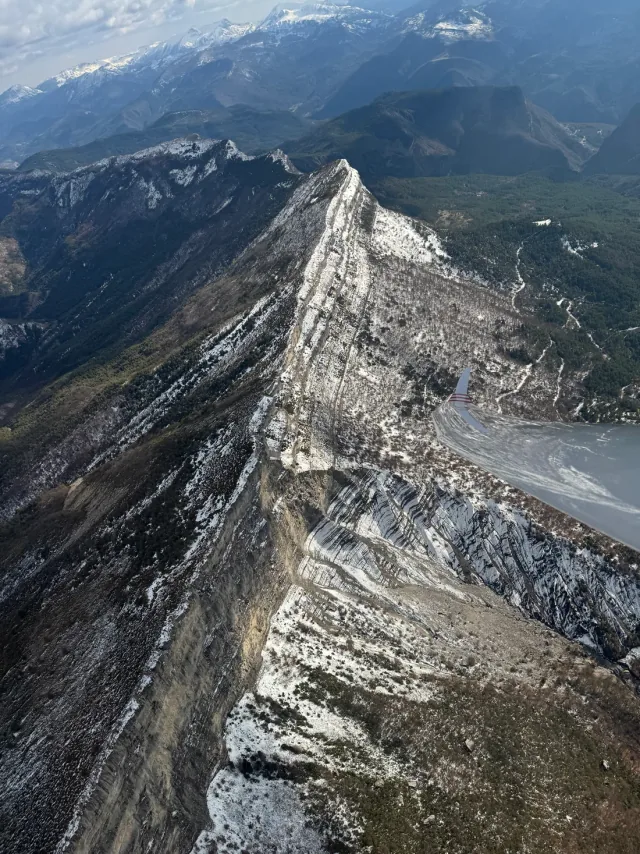
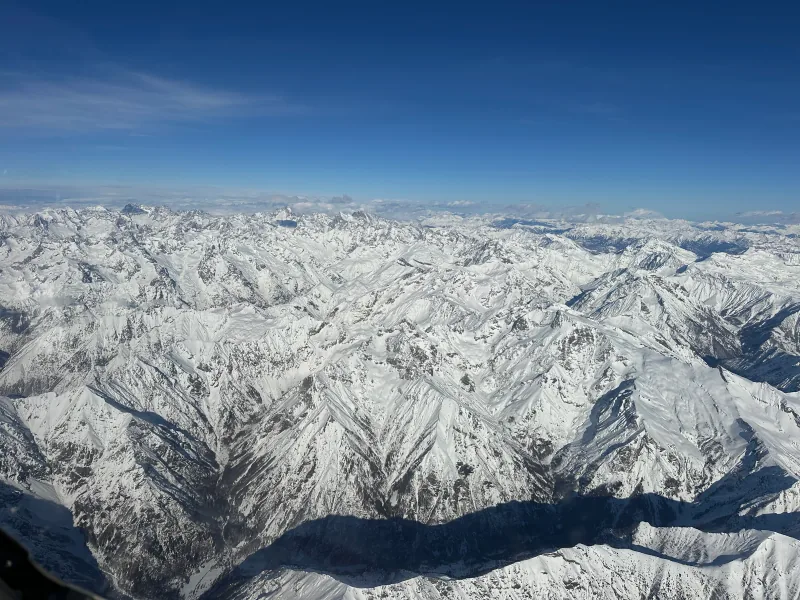
We work on cross-country strategy in the mountains and choosing a flight path with the terrain in mind. We practise flying close to slopes, including below ridge height, and using thermal, ridge and wave lift, as well as combinations of these.
My teaching draws on my competition experience. In recent years, I have also worked as a task setter and, more recently, as a meteorologist at competitions of various levels held in Vinon.
How we fly
The main training format is flying with me in a two-seat glider.
Group flying is also possible: one student flies with me in the two-seater, while one or two other pilots fly single-seaters. To take part in a single-seater, you need the qualifications and competence to fly independently deep into the mountains.
Gliders
For our flights together in the Alps, I usually use a Duo Discus or a self-launching Arcus 2 M. I fly the same Arcus in Namibia during the winter.
We choose the glider according to your goals and preferences. The Arcus 2 M is a higher-performance glider, with better aerodynamic performance and flaps. In comparable conditions, it allows you to develop a more modern, faster style of cross-country flying.
The engine gives us additional flexibility on long cross-country flights, including when the forecast is uncertain or the weather deteriorates. Assessing conditions and planning safely nevertheless remain fundamental to the flight.
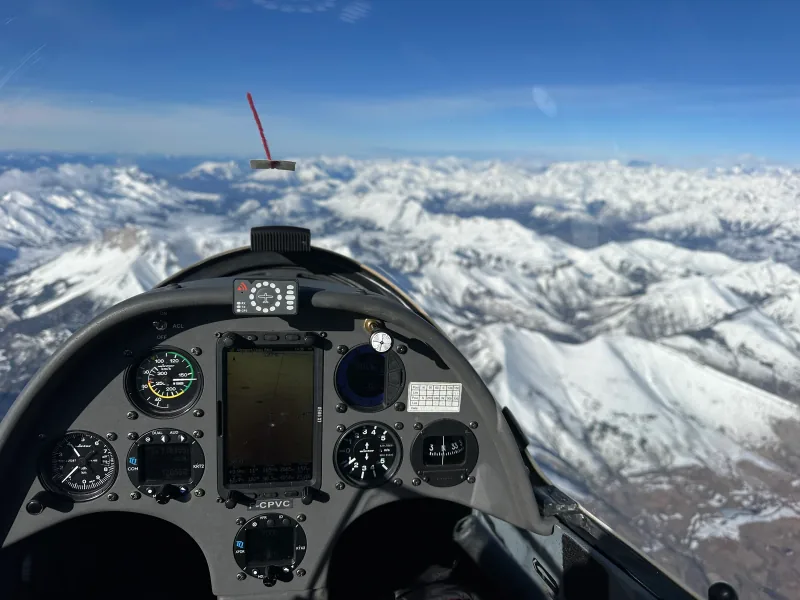
The Arcus has advanced onboard equipment, including an LXNAV LX9070 gliding computer. During training, you can learn to use its navigation functions and online weather services.
Hiring the Arcus 2 M costs slightly more than hiring the Duo Discus.
Flight preparation and debriefing
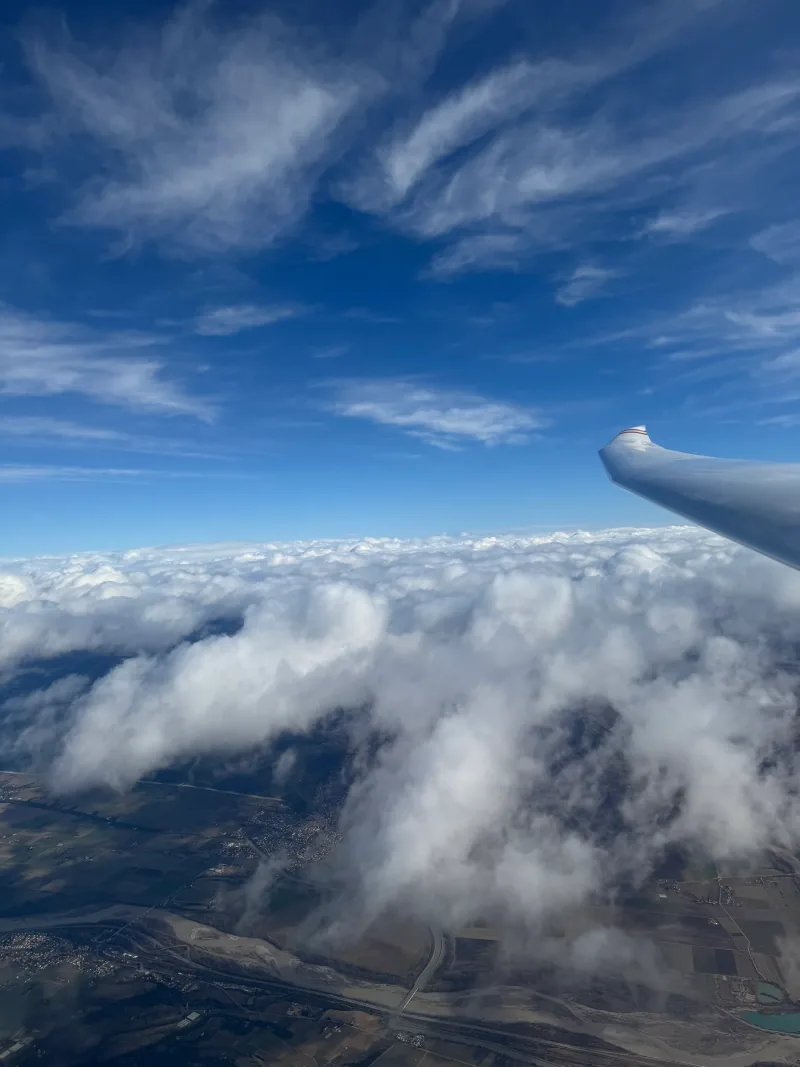
Before flying, we examine the day's weather forecast in detail: how to analyse the data and which systems to use. We use SkySight, TopMeteo, Météo-Parapente and other weather data sources in our preparation. We assess conditions in the flying area and along the intended route. We review current NOTAMs: notices of restrictions and other changes affecting flights in the area of our planned route. Based on the expected conditions, we choose a route and set a cross-country task. We discuss not only the choice itself, but also the reasoning behind it.
After the flight, we carry out a detailed debrief of the route flown using flight analysis tools, including SeeYou and WeGlide. We review the decisions made and identify what to work on next.
Length of stay and flight duration
I recommend allowing a week for the programme. You can plan a longer stay if you wish.
To make full use of the cross-country flying day, I do not take on a second cross-country student during this period. The only other instruction I may give alongside this programme is morning lessons with a student in the initial stage of SPL training.
We plan long cross-country routes, taking the weather into account. A flight can last 4–6 hours or more.
When to come
For cross-country flying in the Alps, I recommend the period from late March or early April to early September.
Preparing for your trip
Before travelling, I recommend studying a map of the flying area and the locations of airfields and outlanding sites in the mountains.
It is useful to review speed-to-fly theory, especially if you are new to cross-country flying, and to read about the physics of wave formation.
I also recommend familiarising yourself with the flight manuals for the Duo Discus and Arcus 2 M. If you are not yet familiar with modern gliding computers, it is worth learning the basics of how they work before you arrive.
If you do not have maps of the flying area or a guide to mountain outlanding sites, you can buy them at the club.
You do not need your own equipment to take part in the programme.
Documents
Bring your passport for registration at the club. You will need your pilot logbook both for flights with me and for independent flying. I sign the entries for our flights together as your instructor.
For independent flying, you will also need your pilot licence and a valid medical certificate.
Getting here
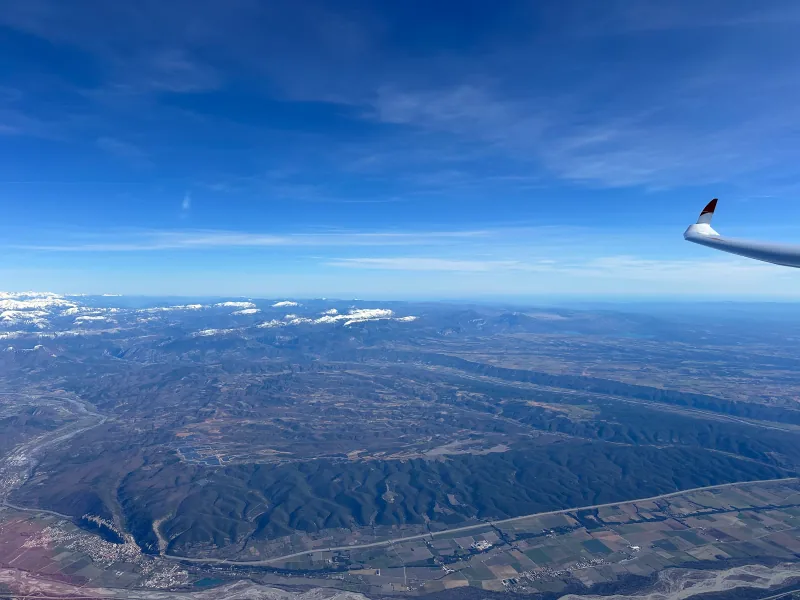
I recommend flying into Marseille Provence Airport (MRS). Nice Airport (NCE) is an alternative, with a longer onward journey. You can hire a car at the airport and drive to your accommodation or the club. AAVA address and directions.
You can reach Vinon itself by bus from Marseille Airport with a change in Marseille or Aix-en-Provence. When planning your trip, check the airport bus services and ZOU timetables to find a suitable connection.
Without a car, you can also take a bus from Marseille Airport to Manosque. Check the current timetable when planning your journey. We discuss any possible pick-up in Manosque in advance: I am usually flying during the day and cannot always collect you or arrange for someone else to do so.
Another option is a taxi or a ride booked through Uber or Bolt. Check the price and availability when booking.
Where we first meet
Our first meeting is at the AAVA Clubhouse in Vinon-sur-Verdon. We arrange the meeting time in advance.
Accommodation
Vinon-sur-Verdon and the surrounding area offer accommodation to suit different budgets and comfort preferences.
For a short stay, the club rooms are among the more affordable options. They are small and simply furnished, with a bed, desk and chair; showers and toilets are in a shared facilities block. There is also one more comfortable room with its own bathroom.
In the warmer months, you can rent a caravan at the club campsite or bring your own tent, caravan or motorhome. Electricity, showers and toilets are available. I arrange club accommodation through the club office.
There are two small Provençal-style hotels about 500 metres from the club. Of these, I recommend La Clape, a comfortable guesthouse within walking distance of the airfield. I can help you book your stay there.
Having a car gives you a wider choice of hotels and apartments in Vinon-sur-Verdon, Gréoux-les-Bains and Manosque. You book these yourself through Airbnb, Booking.com or directly. For a stay of two weeks or more, it is worth comparing options: renting an apartment may cost less than paying the nightly rate for a club room.
Meals
The Clubhouse has a shared kitchen with a cooker, kitchenware and fridges, where club members can prepare their own meals. There is a Carrefour supermarket around 2.5 kilometres away, as well as other food shops nearby.
Le Planeur restaurant is on the edge of the airfield, about 300 metres from the Clubhouse. Vinon-sur-Verdon, Gréoux-les-Bains and Manosque also have restaurants offering a range of cuisines and prices.
What your budget covers
- Instruction: ground and flight lessons, theoretical explanations, route preparation and flight debriefings.
- Club and federation fees: club membership, FFVP membership (the federation licence) and insurance, and daily flying fees.
- Flying: hire of the chosen glider charged according to actual flight time and, for launches behind a tow aircraft, aerotows charged according to actual towing time.
- Materials: maps, an outlanding-site guide and a pilot logbook, if you need to buy them.
You pay me directly for my instruction against the invoices I issue. Flying and club expenses are accounted for separately and paid directly to the club.
You plan your accommodation, meals, travel and local transport according to your preferences and pay for them yourself.
We discuss an initial budget based on the chosen glider, the length of your stay and your goals. The final cost depends on the actual training days and flights.
Discuss your trip
Tell me about your flying experience, goals and preferred dates. We can discuss a suitable flying format, the choice of glider, how to prepare for your trip and an initial budget.
 Message me on WhatsApp+33 6 52 90 81 75